
How to Care for Outdoor Cats During Winter
- Deniza Marcinkevica
- Jan 31
- 2 min read

By: Sheila Zapata, Social Media Intern, and Deniza Marcinkevica, Manager Business Development, Skytails.com
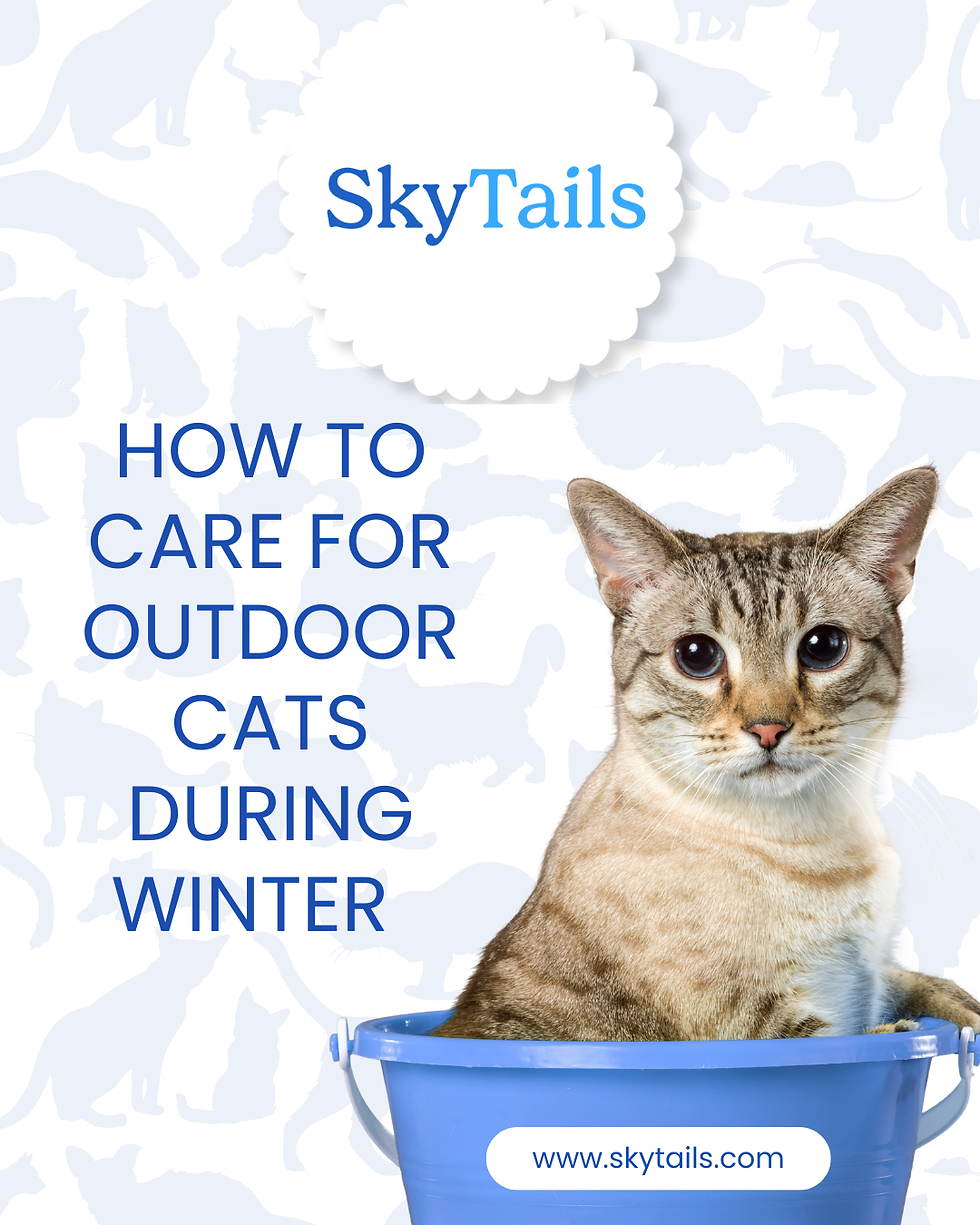
Winter can be a dangerous season for outdoor cats, especially those that are feral, stray, or allowed outside for extended periods. Cold temperatures, snow, ice, and limited food sources all pose serious risks. With proper care and preparation, however, outdoor cats can be kept safer and more comfortable throughout the winter months.
One of the most important ways to help outdoor cats in winter is by providing adequate shelter. A proper outdoor shelter should be insulated, waterproof, and elevated off the ground to protect cats from snow and freezing surfaces. Straw is the best bedding material because it repels moisture and retains heat; blankets and towels should be avoided, as they absorb moisture and can freeze. The shelter entrance should be small to keep cold air out, and facing it away from strong winds helps retain warmth.
Food and water access become even more critical during winter. Outdoor cats need extra calories to maintain body heat, so feeding them more frequently is essential. Dry food is preferable in freezing temperatures because it does not freeze as quickly as wet food. Water bowls should be checked often, as water freezes quickly in cold weather. Heated water bowls or insulated containers can help ensure cats always have access to fresh water.
Cats are resourceful but still vulnerable to extreme cold. Watch for signs of hypothermia or frostbite, such as shivering, lethargy, pale or bluish skin, or limping. If a cat appears weak, disoriented, or injured, it may need immediate veterinary care. Even feral cats can benefit from trap-neuter-return (TNR) programs, which often include winter care guidance and medical support.
Cars can also pose a hidden winter danger. Cats often seek warmth by crawling under car hoods or near tires. Knocking on the hood or honking the horn before starting a vehicle can help prevent accidental injuries. Additionally, avoid using toxic antifreeze alternatives improperly, as antifreeze is highly poisonous to cats.
Limiting outdoor exposure during extreme weather is ideal for owned cats. If possible, bring them indoors during snowstorms, freezing rain, or dangerously low temperatures. Even temporary access to a garage, basement, or enclosed porch can provide life-saving protection. For feral cats, community efforts-such as shared feeding stations and shelters—can make a significant difference.
Conclusion: Caring for outdoor cats in winter requires awareness, compassion, and consistency. By providing shelter, food, water, and safety measures, you help protect cats from harsh conditions and reduce the risks they face. Small actions can have a big impact, ensuring outdoor cats stay warmer, healthier, and safer throughout the cold winter months.
SkyTails Connection: SkyTails is able to prepare you for the unexpected. We want to make sure your pets are taken care of and out of risk of any illness or injury. By providing financial support and peace of mind, SkyTails can guarantee your pets' safety for this winter season.


Comments